A shopper in London adds a pair of boots to the cart, gets distracted, and closes the tab. An hour later, should the reminder arrive in their inbox or in WhatsApp, next to messages from friends? The answer depends on who the shopper is, what they agreed to receive, and how much the message costs you.
Shopify Messaging now supports both channels for abandonment recovery. This guide compares Shopify WhatsApp vs email for abandoned carts so you can decide which to use first, which to add later, and when to use both. If you are setting up recovery flows for the first time, you can set up Shopify Messaging on your store and follow along.
What Shopify Supports for Each Channel
Before comparing, it helps to know what is available natively in Shopify today.
Email automations
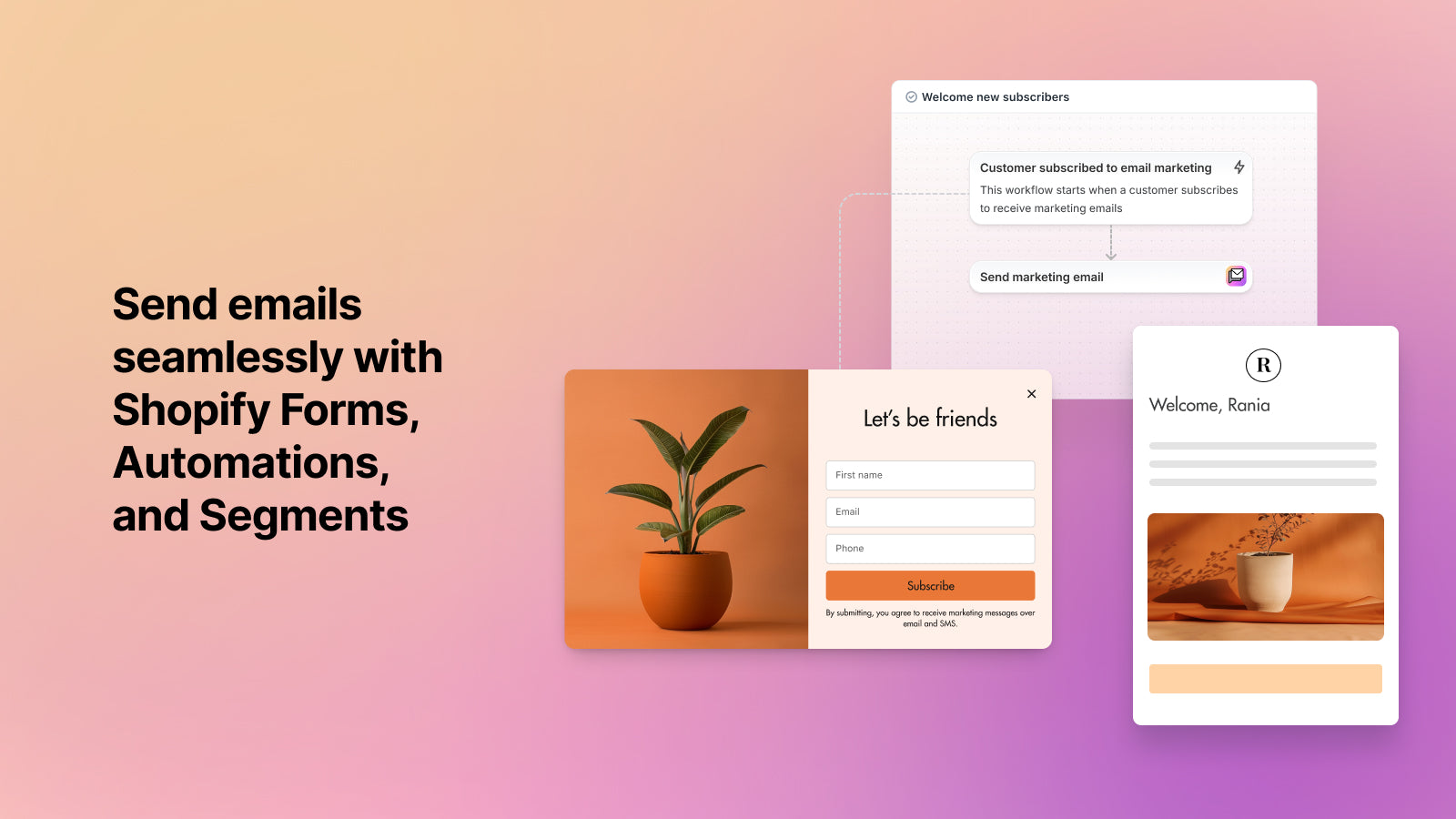
Shopify Messaging has long supported email automations such as abandoned cart, abandoned checkout, and browse abandonment. Its app listing says the first 10,000 emails each month are free, with pricing starting at $1 per 1,000 emails after that (Source: Shopify App Store).
WhatsApp automations
In its Fall ’26 Edition, Shopify announced automated WhatsApp marketing messages that recover sales from browse, cart, and checkout abandonment, along with a way to collect WhatsApp marketing consent at checkout (Source: Shopify Editions Fall ’26).
Country rules for WhatsApp
WhatsApp has country-specific restrictions. At the time of writing, Shopify’s WhatsApp requirements exclude marketing messages to customers located in the United States, among other locations, so US-focused stores need to check this first (Source: Shopify Help Center).
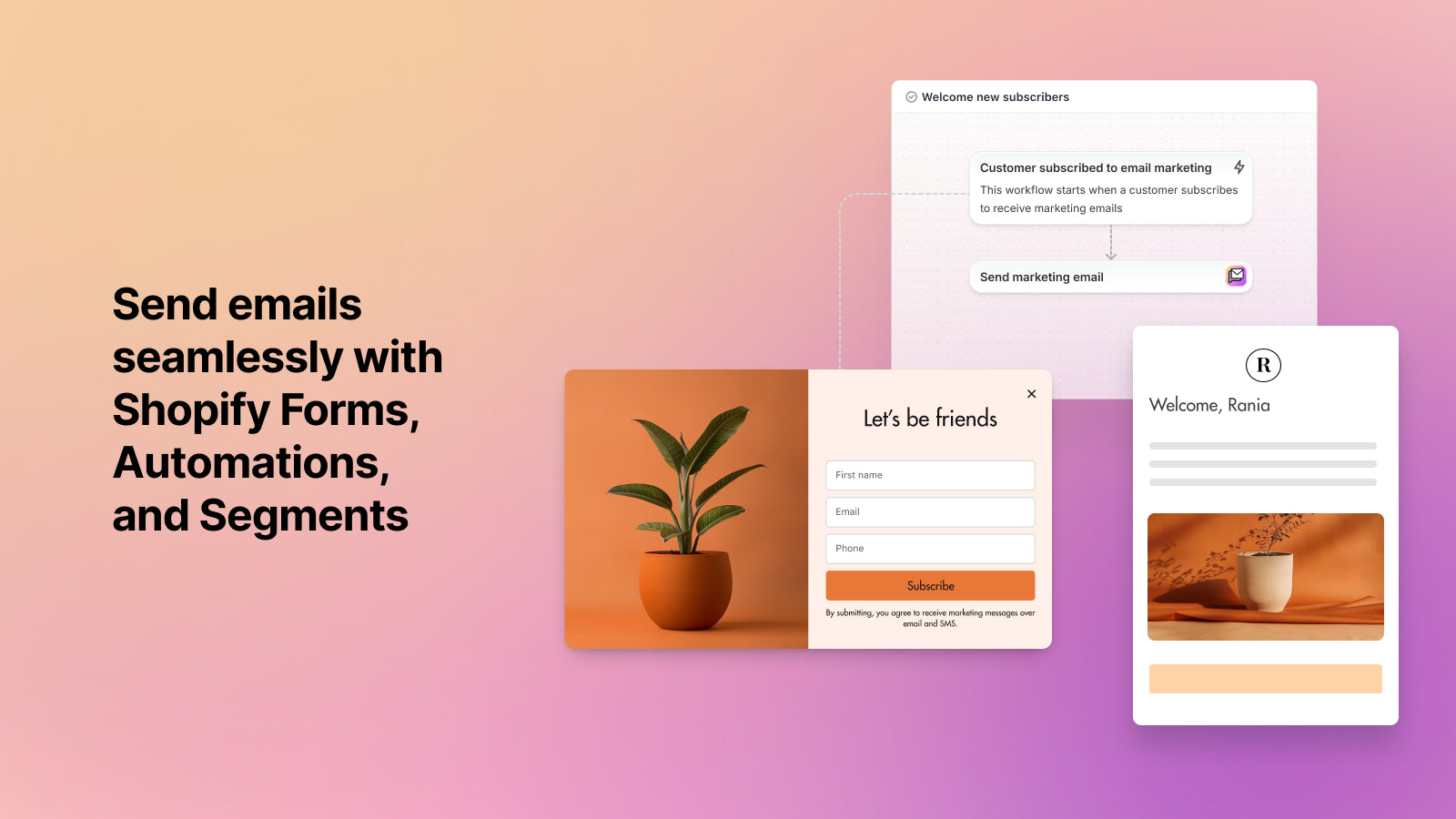
Image source: Shopify App Store.
WhatsApp vs Email at a Glance
Each channel has a different relationship with the shopper, which changes how a reminder is received.
| Factor | ||
|---|---|---|
| Consent | Email marketing consent | Separate WhatsApp marketing opt-in |
| Cost | Low per message on Shopify Messaging | Billed per message, varies by country |
| Reach | Most shoppers who give an email | Only subscribers in supported countries |
| Feel | Expected from stores | Personal, close to friends and family |
| Content | Rich layouts, multiple products | Short message, image, button |
| Approval | Your own templates | Templates approved by Meta |
When Email Should Come First
For most Shopify stores, email is the natural starting point for abandonment recovery.
Your audience is mainly in the US
Because WhatsApp marketing messages to US customers are currently excluded, US-focused stores cannot rely on WhatsApp for cart recovery there. Email remains the core channel.
Your list is mostly email subscribers
Most stores collect far more email addresses than WhatsApp opt-ins. A channel that reaches 5% of abandoners cannot replace one that reaches most of them.
Your carts need context
If abandoned carts often contain several items, bundles, or products that need explanation, email’s richer layout gives room for product details, reviews, and policies.
When WhatsApp Deserves Priority
In some markets and categories, WhatsApp is where customers already talk to brands.
You sell into WhatsApp-heavy markets
In many countries in Europe, Latin America, and Asia, WhatsApp is a primary messaging app. Shoppers there may see a WhatsApp reminder sooner than an email.
Your carts are high value
When an abandoned cart is worth a lot, a per-message cost matters less. A single recovered order can cover many messages.
Shoppers ask questions before buying
If shoppers often hesitate because of sizing, compatibility, or delivery questions, a conversational channel can help. Shopify’s WhatsApp features include keyword replies and buttons, which suit quick follow-up.
Partnered with Shopify: This guide includes Shopify links for merchants setting up abandoned cart recovery across email and WhatsApp.
What to Say in Each Channel
The same reminder should be written differently for an inbox and for a chat app.
Email can carry the full picture
An abandoned cart email can show every item, the cart total, delivery estimate, return policy, and a short review. That makes email a good place to answer the practical questions that stopped the purchase in the first place.
Keep the subject line plain and specific, such as naming the product left behind. Clever subject lines often perform worse than clear ones for transactional reminders.
WhatsApp needs one clear point
A WhatsApp message should read like a short note from a real store: one product image, one sentence of context, and one button back to checkout. Long paragraphs and multiple offers feel out of place in a chat thread.
Because templates need Meta approval, write a few versions in advance rather than drafting them during a busy sale week.
Use the same promise in both
If the email mentions free returns into January, the WhatsApp message should not offer a different policy. Inconsistent messages make shoppers wonder which one is true, and they create extra work for your support team.
Decide when to include an incentive
Discounts in the first reminder train shoppers to abandon carts on purpose. A safer pattern is a plain reminder first, then a modest incentive only in the final touch, and only for products with enough margin. You can create targeted discounts in Shopify for this purpose.
A Simple Cost Comparison
Recovery channels should be judged on cost per recovered order, not cost per message.
Set up an illustrative example
Imagine 1,000 abandoned checkouts in a month with an average cart of $80. These figures are hypothetical and only show how to think about the trade-off.
Compare the cost side
Email costs on Shopify Messaging are low at this volume. WhatsApp costs depend on the destination country and are charged per message, so sending two reminders to 300 opted-in shoppers creates a direct cost you can calculate from Shopify’s current price list.
Compare the value side
If WhatsApp recovers even a few more orders than email would for the same shoppers, the extra revenue may outweigh the message cost. Measure this with a test rather than assuming it.
Using Both Without Overloading Shoppers
For stores that can use both channels, sequence matters more than volume.
Do not send both at the same moment
Two reminders in two apps within minutes feels pushy. Choose one channel for the first nudge and use the other only if there is no response.
Match the channel to the shopper’s choice
If a shopper opted into WhatsApp at checkout, they told you how they prefer to hear from you. Respect that preference rather than defaulting everyone to the same flow.
Cap total reminders
Two or three touches across all channels is usually enough. More than that tends to increase unsubscribes faster than it increases recovered orders.

Image source: Unsplash.
A Quick Decision Framework
Use these questions to choose your first channel.
- Where are most of your abandoners located? If mostly in the US, start with email.
- How many WhatsApp opt-ins do you have? If very few, start with email and grow consent.
- What is your average cart value? Higher values make WhatsApp costs easier to justify.
- Do shoppers hesitate because of questions? If yes, WhatsApp’s reply features may help.
- Can you test both on the same segment? If yes, run a split test for a few weeks.
Whichever channel you start with, review your automation settings in Shopify after the first month and adjust.
Measuring Results Fairly
Comparing channels only works if you measure them the same way.
Track recovered orders per 100 abandoners
Divide recovered orders by the number of shoppers who entered each flow. This shows real performance regardless of list size.
Run the comparison over at least a few weeks and on similar shoppers. Comparing WhatsApp subscribers in Spain with email subscribers everywhere mixes market differences with channel differences, which makes the result hard to trust.
Include unsubscribes and opt-outs
Every WhatsApp message includes a stop instruction, and email includes unsubscribe links. A channel that recovers orders but drives many opt-outs may cost you more later.
Watch discount dependence
If one channel only works when it includes a discount, compare margins, not just recovery rates.

Image source: Unsplash.
Final Thoughts
In the Shopify WhatsApp vs email debate for abandoned carts, email is the better first channel for most stores, especially US-focused ones, because of reach and low cost. WhatsApp earns priority in markets where customers already use it, for high-value carts, and when shoppers need quick answers. Start with one channel, grow consent for the second, and use Shopify Messaging to test both on real data before scaling.
FAQ
Can I send WhatsApp abandoned cart messages to US customers?
At the time of writing, Shopify’s WhatsApp requirements exclude marketing messages to customers located in the United States. Check the current requirements before planning.
Do I need separate consent for WhatsApp?
Yes. WhatsApp marketing needs its own opt-in, which Shopify can collect at checkout. Email consent does not cover WhatsApp.
Is WhatsApp more expensive than email on Shopify?
Generally yes per message. WhatsApp is billed per message by country, while Shopify Messaging includes a free monthly email allowance.
We only recommend tools we’ve tested and trust. This post may include affiliate links, meaning we may earn a commission if you choose to purchase – at no extra cost to you.